Personal Trainer Salary
Make Your Workout Work for You
Find career success helping others learn to love working out as much as you do.
Get to the Bottom Line
There’s no question that the average pay for certified personal trainers has increased significantly over the last several years, but pay can vary by experience level, certifications, specialization and location. And it can vary a lot. According to Payscale.com, the average personal trainer salary in the United States in 2022 is more than $19 per hour and typically falls between $11 and $52 per hour. Trainers who work independently or in large cities earn more; those in smaller cities or at chain gyms earn less. According to the Bureau of Labor Statistics, the demand for personal trainers and group fitness instructors is expected to grow by 39% by 2030. Job opportunities are on the rise and the industry is growing.
Get Certified!
Build a rewarding career by helping others live a healthy lifestyle. As a personal trainer, you can live your dream by sharing your passion for fitness. Embark on a new career now.
Get Certified Today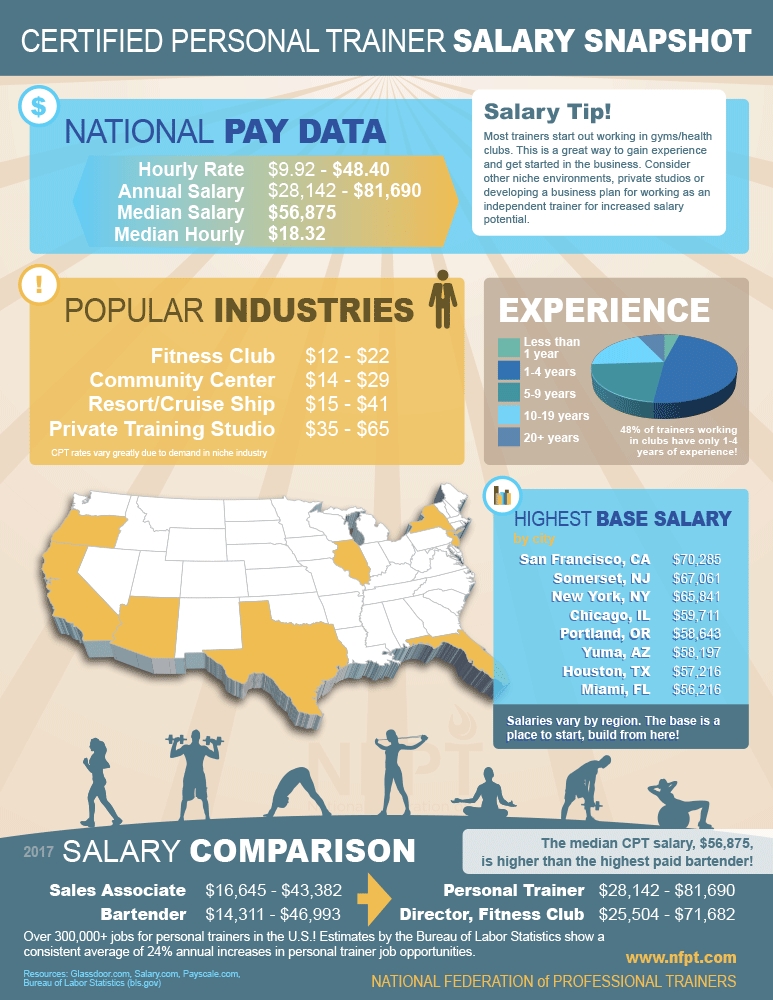
Bump Up the Base
No matter where you live, there are ways to increase your trainer salary. Professional trainers with multiple certifications and specialist-level titles earn even more than those with one certification and limited personal fitness experience. As businesses and insurance companies continue to recognize the benefits of health and fitness programs for their employees, the number of corporate wellness programs and onsite exercise facilities are on the rise. Think about the many ways you could offer services in these locations. You could even jump-start a fitness benefits program in a business in your local community. You could work with clients who have medical needs or those who need advanced skills like high school or college athletes. Focusing on a specific client demographic makes you more marketable and adds to your bottom line, too.
I’ve been a trainer with NFPT since 1996 and have been a part of the health and fitness world for 40 years. In my opinion, NFPT is the best; very usable, very credible and quite affordable. Plus, they are constantly keeping up with and setting new marks for continuing education courses and staying abreast of new developments within the training field. I give NFPT an A+. BTW, their staff is excellent.
Jules F.
Work Out and Up
There are many places to work as a personal trainer. Most personal trainers start at a health club or fitness facility. Though the pay can be low, these positions offer benefits like marketing assistance, avenues to advancement and experience in the business side of fitness. Working in a private studio can offer a more structured approach to personal training and provide mentors and guidance to help you grow as an entrepreneur. But you may need to pay rent and/or a percentage of your fees to the business owner. You’ll probably have to pay for your own liability insurance. You’ll need to consider these fees when you establish your pricing.
Working independently might be a good fit for you. You can conduct sessions anywhere: a client’s home, garage or even their backyard. You could bring your services to small businesses that want to offer their employees or customers on-site workplace wellness opportunities. Your trainer salary would be yours alone but you’d need to consider supply and demand and make sure your services stand out to potential clients. Start your decision-making process with the pros and cons of each option and establish your goals in a timeline that works for you. Smaller, more achievable steps are milestones to your long-term, sustainable success.
Discover Personal Training
Find out now if a career in personal training is right for you.
Learn MorePump Up Your Credentials
Most personal trainers work with clients who want to improve their physical fitness levels and weight management. When you earn more credentials in nutrition, endurance and resistance training, you can coach new populations of clients. Competitive athletes, older adults and people with specific medical concerns need skilled trainers who specialize in their distinct situations. Grow as a personal trainer and increase your trainer salary potential by studying to develop new skill sets.
Learn MoreGet the Free GuideLearn more about your fitness career.
Explore a personal trainer’s daily routine, income potential and career options with the free NFPT Trainer Guide. It’s packed with insights from career personal trainers.